

Q&A with Sarah Schnitker on Interdisciplinary Initiatives at Baylor
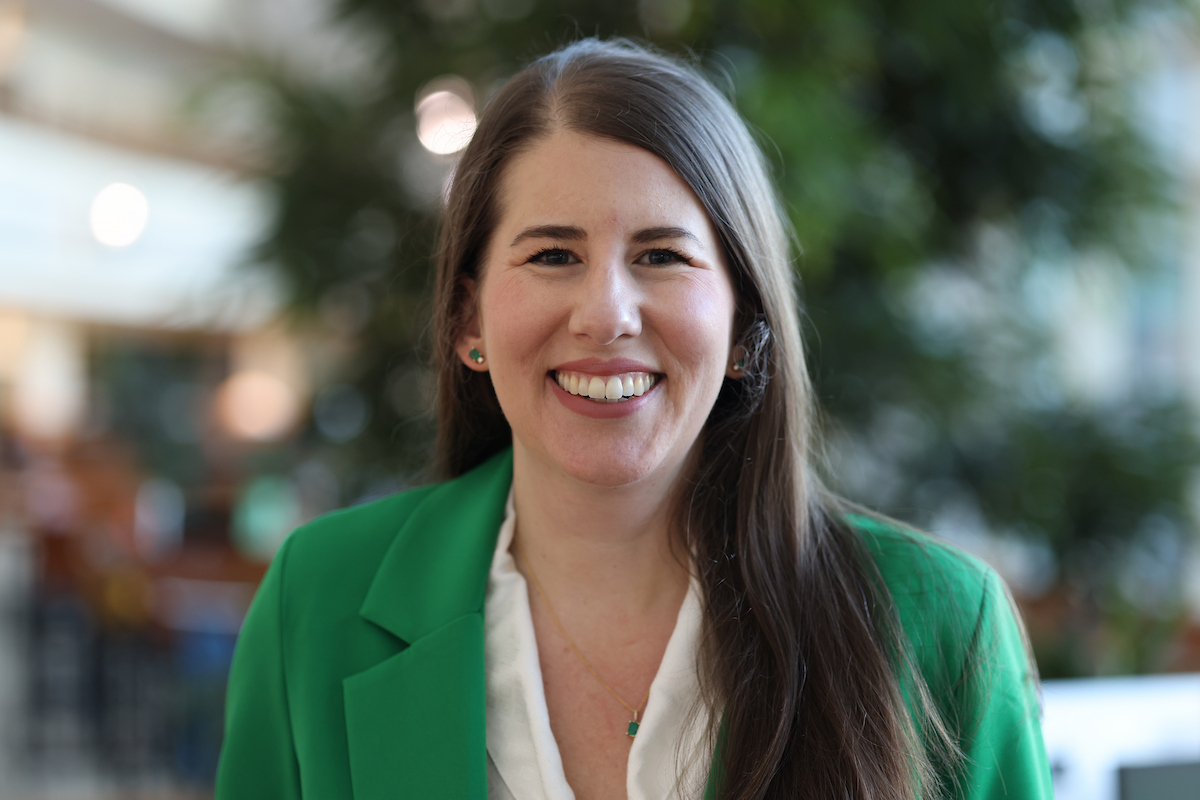
Dr. Sarah Schnitker was appointed this fall to the newly created position of associate vice provost for interdisciplinary initiatives in the Office of the Vice Provost for Research. This important leadership role aligns with Baylor’s strategic vision, Baylor in Deeds, and reflects key insights from the COACHE survey.
Schnitker, who serves as professor of psychology and neuroscience and director of the Baylor Research in Growth and Human Thriving Science (BRIGHTS) Center, has led or served on numerous interdisciplinary projects throughout her career. Her experience in navigating both the challenges and joys of working across academic disciplines will inform her service to colleagues.
Schnitker shares more in the following interview:
How do you hope to serve your colleagues across campus in this role?
The primary motivation for this position is to help faculty have awesome interdisciplinary research experiences with fewer challenges than they’ve had in the past. Our strategic plan, Baylor In Deeds, highlights interdisciplinary research as a key commitment. Many faculty also express a deep desire to work across disciplines, and numerous faculty are engaged in research and teaching that transcends typical silos. My hope is to make the academic space more hospitable to do great interdisciplinary work.
Where do you see opportunities to enhance Baylor’s collaborative environment across campus?
We’ve taken two different COACHE Surveys in recent years that have identified this as an area where we can improve. Right now, we have a subcommittee on interdisciplinary work in progress. We’re talking about what is working, as well as what is not working. The COACHE committee is moving toward concrete suggestions that I hope to implement in collaboration with leaders and faculty across campus.
So, my first step is really to listen—a listening tour where I talk to a lot of people and learn from our community. I want to get the whole picture of barriers to interdisciplinary work, as well as potential solutions. A few areas we’re discussing include: making sure everyone gets credit for their work, communication differences across disciplines, capital resources and more.
You mentioned a listening tour. When does that begin?
That’s my first, immediate step—to start a listening tour and talk to people across campus who are already doing interdisciplinary work, or who are in research administrative positions across our colleges. Center directors, people who are already invested in this work—we’re interested to hear their thoughts and see what is working, where the pain points are and, as I said, look at solutions. We can only get to where we want to be by sharing information across teams and building solutions. From there, we’ll make a strategy and specific plans to improve our interdisciplinary work at Baylor.
Why was this role appealing to you?
I get really excited about interdisciplinary work and recognize that this kind of work is essential for universities tackling big challenges. The interdisciplinary projects I’ve been a part of have been some of the most edifying work I’ve experienced, and I want other faculty to experience that joy (and perhaps a little less of the frustration). As Baylor faculty, we want to make a difference in the world, and I am eager to work with faculty and staff across campus to enhance systems and culture to help us do that.
